

Ergonomic Hair Trimmers for Professional Barbers
Table of Contents
- Why Ergonomic Hair Trimmers Matter for Professional Barbers
- Key Features That Define Ergonomic Hair Trimmers
- How to Prevent Carpal Tunnel as a Barber
- Professional Trimmer Weight Comparison: What the Numbers Say
- Best Cordless Trimmers for Barbers: Runtime and Charging
- Maintenance and Sanitization for Long-Term Durability
- Frequently Asked Questions
Last Updated: September 27, 2026
Why Ergonomic Hair Trimmers Matter for Professional Barbers
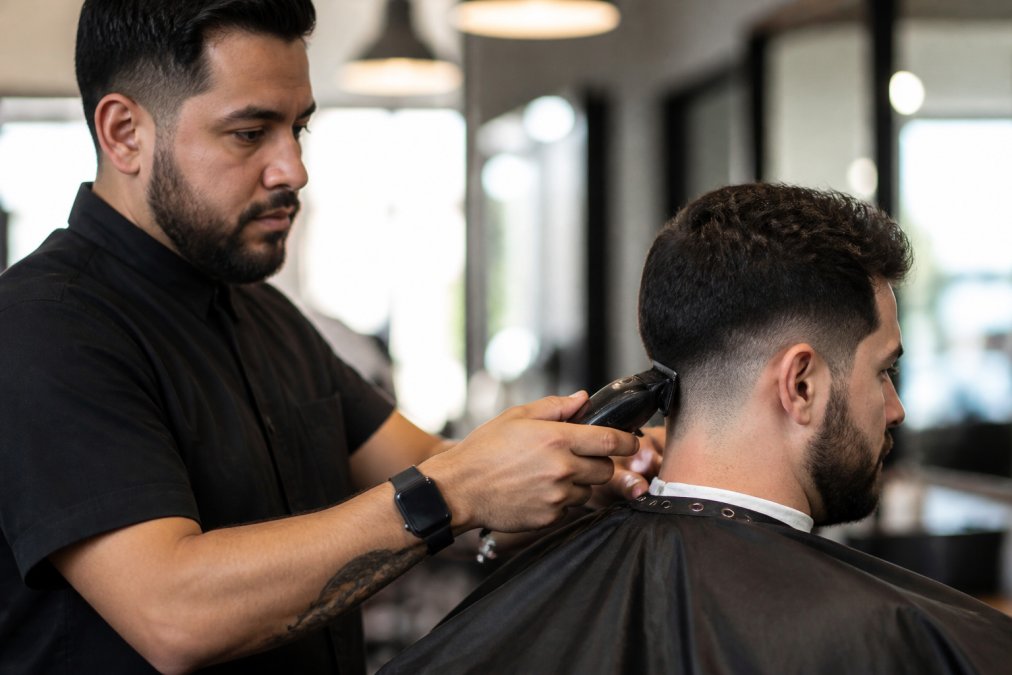
A barber cutting eight to twelve heads a day makes thousands of small, repetitive wrist movements, and over months that repetition compounds. Ergonomic hair trimmers for professional barbers reduce that strain through better weight distribution, lower vibration, and handles shaped for a natural grip rather than a clenched one. Major's built its trimmer around Flex Technology because the standard straight-bar design can force the wrist into an unnatural angle for hours at a time.
The Hidden Cost of Wrist Fatigue and Repetitive Strain
Wrist fatigue shows up before injury does. Most barbers notice it as a dull ache after a long Saturday, then as a tingling sensation in the fingers, then as grip weakness that makes fine detailing harder than it should be. The Health and Safety Executive guidance on repetitive strain injuries notes that repetitive wrist motion is one of the leading causes of work-related upper limb disorders in manual occupations.
How Trimmer Weight and Balance Affect All-Day Comfort
Balance matters more than raw weight. A 200g trimmer with the motor toward the back of the handle feels heavier than a 250g unit balanced over the grip. When weight sits forward, your thumb and forefinger hold the cutting head level; when it sits over your palm, your whole hand shares the load.
Key Features That Define Ergonomic Hair Trimmers
Three features separate a genuinely ergonomic trimmer from one with a comfortable-looking handle: motor type (vibration and torque), blade material (heat buildup and feel against skin), and vibration dampening (how much motor energy reaches your hand instead of the hair).
Motor Technology: Brushless, Vector, and Torque Output
Brushless motors run cooler and last longer than brushed motors because there are no carbon brushes to wear down. Vector motors maintain torque under load, so the blade keeps cutting at the same speed whether you're doing bulk removal or detailing, consistency that matters for fade work, where a motor that bogs down in thick hair leaves lines you have to fix.
Blade Materials and Heat Dissipation
Stainless steel blades hold an edge well but transfer friction heat into the skin. Ceramic blades run cooler but chip if dropped. Some professional-grade blades use a DLC coating, which reduces friction and keeps the edge sharper for longer between sharpening sessions.
Vibration Dampening and Low Noise Operation
Vibration is the hidden variable in hand fatigue: a trimmer that buzzes hard forces your muscles to constantly correct against it, and that micro-correction wears you down by hour four. Low noise matters because clients with sensory sensitivities, particularly children, react to sound before the blade touches their head.
How to Prevent Carpal Tunnel as a Barber
Preventing carpal tunnel as a barber means reducing three inputs: sustained awkward wrist posture, repetitive force, and vibration exposure. No single change eliminates the risk, but stacking several small ones makes a measurable difference over a career.
Start with these habits:
- Keep your wrist neutral, not bent, when you grip the trimmer
- Alternate between your dominant and non-dominant hand for bulk removal
- Take a 30-second stretch break between clients, not just between hours
- Choose a trimmer with a taper lever you can reach without repositioning your grip
- Ice your wrist after unusually heavy days, not just when it hurts
Professional Trimmer Weight Comparison: What the Numbers Say
Weight alone tells you less than weight distribution: two trimmers can weigh the same and feel completely different depending on where the motor sits and how the handle is shaped. Look at the relationship between weight, motor speed (RPM), and torque, that ratio determines how much grip pressure you apply, and grip pressure is the hidden driver of wrist fatigue.
| Weight Range | Typical Motor Speed (RPM) | Typical Torque Feel | Best For | Watch Out For |
|---|---|---|---|---|
| Under 200g | 5,000-6,500 | Low to moderate; may bog in thick hair | Detailing, precision work, fine lines | Motor may lack torque; requires lighter passes |
| 200-280g | 6,000-7,500 | Moderate to high; stable under load | All-day general cutting, fades | Balance point varies widely; test before buying |
| Over 280g | 6,500-8,000 | High; maintains speed in coarse hair | Bulk removal, coarse or wet hair | Wrist fatigue on long shifts if poorly balanced |
How to Calculate Your Ideal Weight-to-Torque Ratio
Start with your primary cutting tasks. For fades and detailed line work, choose consistent torque at lower speeds, typically a brushless or vector motor rated for steady output rather than peak RPM. For bulk removal on coarse hair, you need higher torque to avoid stalling, even if the tool is slightly heavier.
The Trade-Off Between Battery Weight and Runtime
Cordless trimmers add battery weight in the handle. A lithium-ion pack delivering a full day of cutting might add 50-80g over a smaller pack, worth it if balance stays neutral, but a strain if the battery sits at the base of the handle and pulls the center of mass backward. The best cordless designs aim to position the battery low and centered, so the trimmer feels like an extension of your hand rather than a tool you fight to control.
Best Cordless Trimmers for Barbers: Runtime and Charging
The best cordless trimmers for barbers balance runtime against weight, because battery capacity adds grams. A lithium-ion battery that lasts a full day can be preferable to a lighter one that dies mid-afternoon.
Maintenance and Sanitization for Long-Term Durability
Blade care determines how long a trimmer stays comfortable. A dull blade pulls hair instead of cutting, forcing you to press harder and grip tighter, exactly the strain ergonomic design removes. Maintenance also means matching your cleaning routine to the blade material, because the wrong chemical degrades the cutting edge, increases friction, and shortens tool life.
Daily Cleaning: The 60-Second Routine That Protects Your Investment
After every few clients, brush hair and product residue from between the blade teeth with a small stiff-bristle brush, an old toothbrush works, sweeping from the base toward the tips. Then apply two or three drops of blade oil along the cutting edge while the trimmer runs; the oil flushes fine particles and reduces friction, heat, and vibration. Skipping this turns a smooth-cutting trimmer into a noisy, pulling tool.
Material-Specific Sanitization: What Works and What Destroys
Not all blade materials react the same way to disinfectants, the wrong product can pit the surface, strip coatings, or leave residue that irritates clients' skin. Match your protocol to the blade:
- Stainless steel blades: These are the most forgiving. They tolerate standard EPA-registered disinfectant sprays, wipes, and barbicide solutions. After disinfecting, wipe with a clean cloth to remove chemical residue, then oil the blade. Avoid soaking for extended periods, as moisture can reach the pivot point and cause rust.
- Ceramic blades: Ceramic is chemically inert and won't corrode, but it's brittle. Avoid harsh abrasive cleaners and never use a metal brush. Most ceramic blades can be wiped with isopropyl alcohol (70% or higher) or a mild disinfectant wipe. Some chemical disinfectants with high concentrations of quaternary ammonium compounds can leave a film that affects cutting performance, so follow with a water-damp cloth and dry thoroughly.
- DLC (Diamond-Like Carbon) coated blades: The coating reduces friction and keeps the edge sharper for longer, but it can be damaged by abrasive cleaners or vigorous scrubbing. Use a soft cloth or wipe with a mild disinfectant. Avoid soaking in harsh chemicals, as the coating may degrade over time. DLC blades generally resist corrosion well, but the underlying steel can still rust if moisture sits on the edge.
Blade Alignment and Sharpening: The Ergonomic Connection
A blade slightly out of alignment can cut unevenly and vibrate more, and that vibration can travel into your hand, forcing muscles to work harder to keep the trimmer steady. It's advisable to check alignment periodically by running the trimmer and listening for a consistent hum; a rattle or rhythmic pulse may indicate realignment is needed. Most trimmers use a system for adjustment, consult your manual.
Frequently Asked Questions
What trimmers do professional barbers use for precision work?
Professional barbers typically choose trimmers with fine-tooth blades, zero-gap capability, and a taper lever for detailed fade work. Ergonomic hair trimmers with brushless or vector motors maintain consistent torque at low speeds, which helps with crisp lines and bulk removal. Weight distribution and an ergonomic handle also matter for control during long sessions. Major's Flex Technology adapts to head contours, which can improve precision on varied client head shapes.
How does trimmer weight affect long-term wrist health for barbers?
Trimmer weight directly influences wrist fatigue and strain over a career. A professional trimmer weight comparison often shows heavier models increase torque demands on the wrist, especially during fade work and detailing. Lighter trimmers with balanced weight distribution reduce the load on forearm muscles and tendons. Barbers who use ergonomic hair trimmers with low vibration and a comfortable grip report less all-day discomfort, which supports long-term musculoskeletal health.
Are lightweight trimmers better for professional use?
Lightweight trimmers can reduce wrist fatigue, but weight alone does not determine performance. A trimmer that is too light may lack the torque needed for bulk removal or thick hair textures. The best cordless trimmers for barbers balance low weight with sufficient RPM and motor power. Look for models with vibration dampening and an ergonomic handle that fits your grip. Major's trimmer is engineered for both professional barbers and home use, with Flex Technology for contour adaptation.
How do adaptive trimmers like Major's Flex Technology improve barber comfort?
Adaptive trimmers like Major's with Flex Technology follow the natural contours of the head and face, reducing the need for constant wrist adjustments. This can lower wrist fatigue during long appointments and improve cutting performance on diverse head shapes. The design also helps with sensitive skin by maintaining blade alignment and reducing nicks. Developed with experienced barbers, Major's trimmer prioritizes all-day comfort and precision for professional use.